65 Broadway SUITE 1004, New York, NY 10006, USA
Most Insurance Accepted
Se Habla Español

4.6 Star Google Reviews

ADVANCED REGENERATIVE JOINT THERAPY
Support Joint Protection Without Surgery
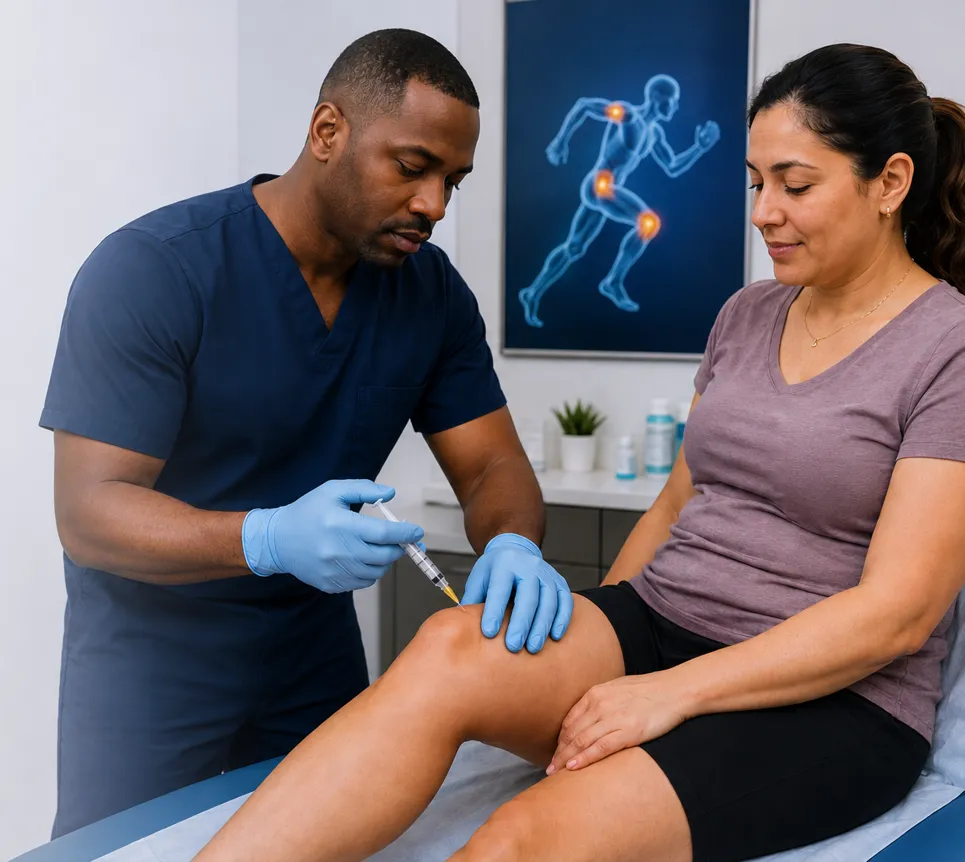
Alpha-2 Macroglobulin (A2M) injections help target harmful enzymes that may contribute to cartilage breakdown, supporting joint preservation and long-term comfort.
Helps support joint preservation
Targets inflammation-related enzymes
Minimally invasive procedure
Personalized regenerative treatment
4.5+ Rating
Most- Insurance Accepted
Same-Week Appointments
Ongoing Joint Stress Can Affect Everyday Movement

Knee stiffness

Cartilage wear

Joint inflammation

Pain while walking
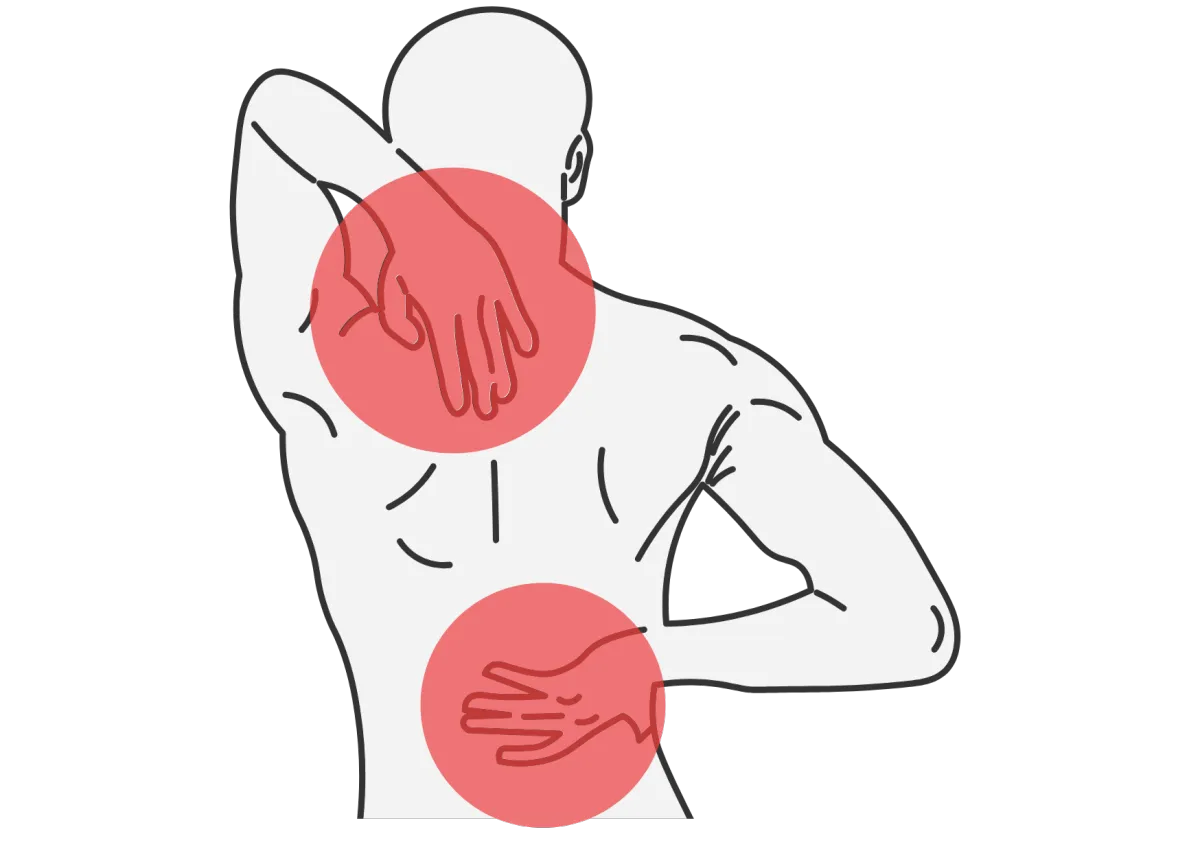
Arthritis discomfort

Pain that hasn’t improved with injections or therapy
When cartilage continues to break down, regenerative support may help preserve joint comfort and function.
What Is Alpha-2 Macroglobulin (A2M)?
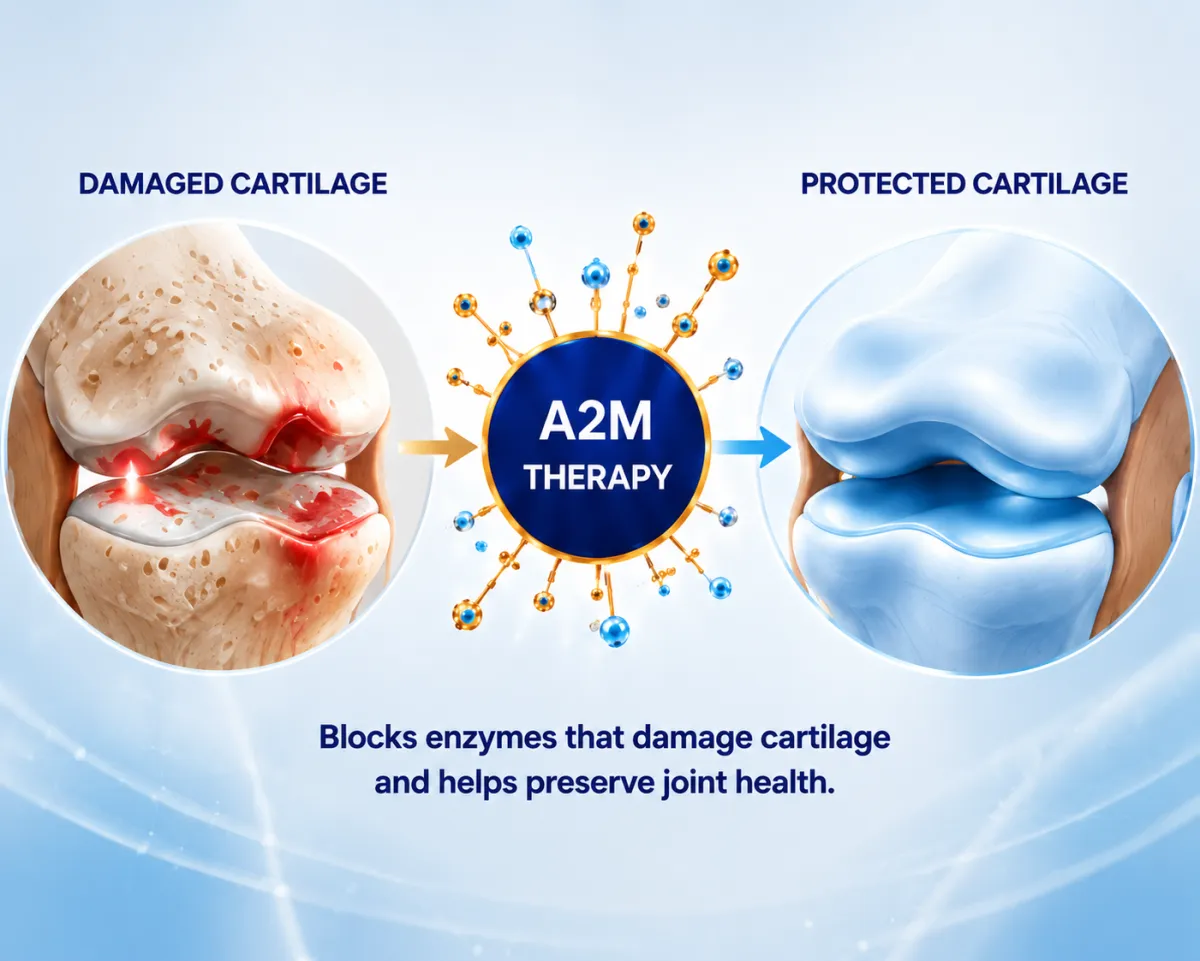
Alpha-2 Macroglobulin (A2M) is a naturally occurring protein found in the blood that may help block enzymes linked to cartilage breakdown and inflammation.
A2M injections are designed to support joint preservation by helping reduce damaging enzyme activity inside affected joints.
This treatment is commonly explored for:
Knee pain
Arthritis
Joint degeneration
Cartilage wear
Sports-related joint stress
Chronic inflammation
How A2M Therapy Supports Joint Health

Draw & Prepare Sample
A blood sample is collected and processed to isolate concentrated A2M proteins.

Target Harmful Enzymes
A2M helps bind to enzymes linked to cartilage damage and inflammation.

Support Joint Preservation
The treatment may help support healthier joint function and comfort over time.
Many patients seek A2M therapy to help support long-term joint health naturally.

Stay Active With Better Joint Support
Whether it’s walking comfortably, staying active, or supporting long-term joint function, A2M Therapy may help protect movement naturally without major surgery.
What to Expect

Consultation
We listen to your concern and medical history.

Evaluation
Advanced imaging and thorough assessments.

Customized Treatment
Personalized plan using best non-surgical options.

Recovery & Progress
Guided support to help you heal and regain mobility.
Why Choose Us?

Expert Team
Highly trained specialists providing top-tier care.

Advanced Technology
Latest equipment for safe and effective treatments.

Personalized Care
Treatments tailored to your specific needs.

Proven Results
Thousands of patients experiencing real relief.
"We believe every patient deserves options, hope, and the chance to heal naturally. Our approach isn't just about treating pain — it's about restoring your quality of life."
- NYC Pain MD Team
FAQs
Find Answers to Your Pain Management Questions Here
What is A2M?
A2M injections offer a new way to treat chronic inflammation around joints and other areas of the body where cartilage has become worn.
Are these treatments safe?
Yes. All of our procedures are FDA-approved or evidence-based, and performed by trained specialists using advanced imaging guidance.
Do you accept insurance?
Most insurance plans are accepted. Coverage depends on your plan and treatment type. Some regenerative therapies (like PRP or stem cells) may be cash-pay only.
How long does pain relief from injections last?
Relief can last anywhere from a few weeks to over a year, depending on the type of injection and the patient’s condition.
How does A2M differ from PRP?
A2M (Alpha-2-Macroglobulin) and PRP (Platelet-Rich Plasma) are both regenerative therapies derived from your own blood, but they serve opposite functions. Think of A2M as a cartilage protector that blocks destructive enzymes, while PRP is a construction crew that uses growth factors to rebuild damaged tissue.
Do I need surgery if these don’t work?
Not necessarily. Many patients find lasting relief without surgery. If surgery becomes the best option, our treatments often help delay or reduce the need for invasive procedures.

Explore Advanced Non-Surgical Joint Support
Schedule a consultation to learn whether A2M regenerative therapy may help support your comfort, mobility, and joint health.

We help patients in New York City find lasting relief from chronic pain with personalized, non-surgical treatment options.


Quick Links
Contact Us
65 Broadway SUITE 1004, New York, NY 10006, USA
Location

Conveniently located in
Lower Manhattan